How to Track a Crochet Project: A Complete Tracking Guide
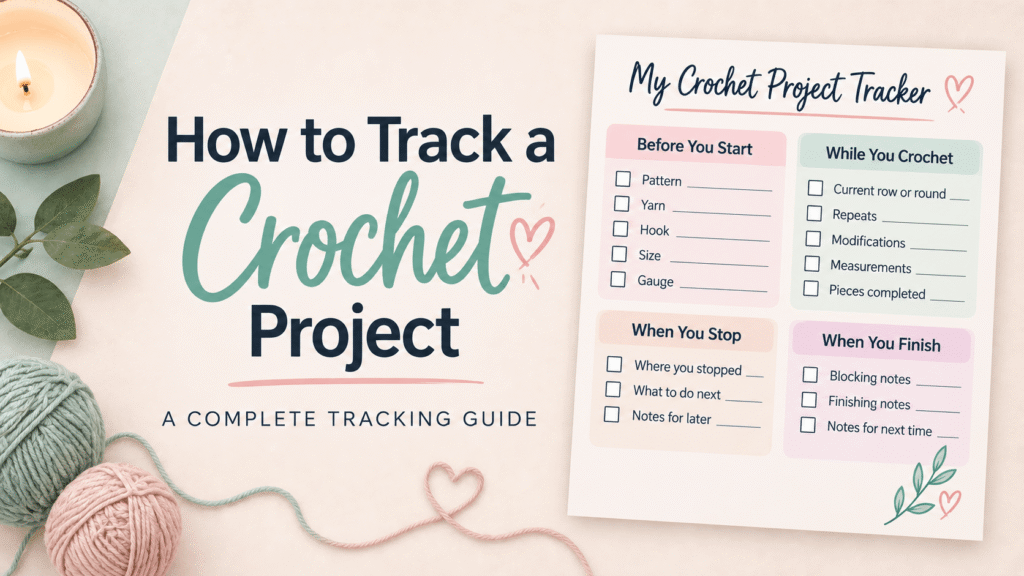
Have you ever picked up a project and thought:
“Where was I?” or “Which hook was I using?”
Maybe you’re making the pattern again months later and can’t remember what you changed, which hook gave you the right gauge, or how you adjusted the sizing.
Or perhaps you want to order more yarn for an old project, but you can’t remember which yarn you used.
When you’re working on a project regularly, these details can seem obvious. You think you’ll remember them.
But once you put the project down for a few days, weeks, or even months, those little details can be surprisingly easy to forget.
That’s where keeping track of your crochet project can help.
Why Keep Track of Your Crochet Projects?
Keeping a record of your project can help you:
- Remember where (which row/repeat) you stopped
- Record changes you made to the pattern
- Keep track of any adjustments
- Recreate a project you loved/ buy material easily
- Make a matching or second piece more easily
- Pick up an unfinished project without having to work out where you left off
- Keep all your project information together
It’s useful if you regularly have more than one crochet project on the go or tend to take breaks from your projects.
Think of your project notes as a way to remember everything your future self might need to know.
Want an easier way to keep track of your projects?
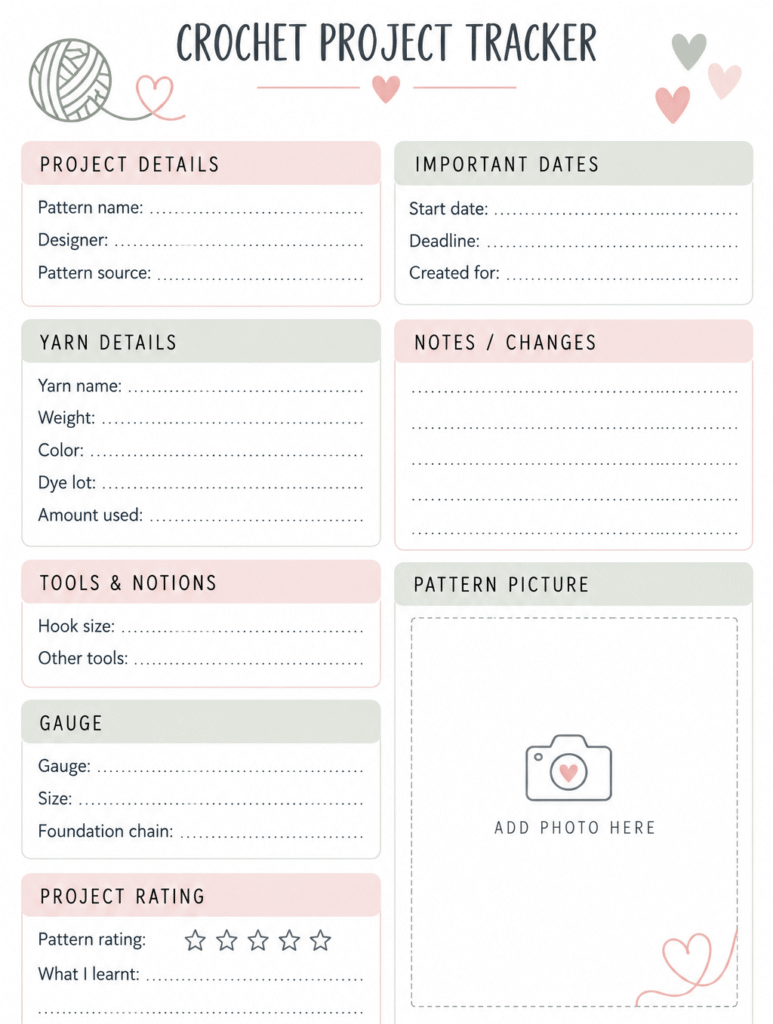
Grab my FREE Crochet Project Planner and keep your project details, notes, and plans all in one place.
👉 Download the FREE Crochet Project Planner
What to Record as you Crochet
1. The Pattern You’re Using
This might seem unnecessary when you’ve just started a project, but it’s surprisingly useful later.
You may have several patterns saved that look similar, or you may put the project away and forget exactly which pattern you were using.
Keep track of:
- Pattern name
- Designer
- Where you purchased or downloaded it
- Pattern link or file location
- Version or update date, if relevant
If you’re working from a printed pattern, you can keep it in a file of all patterns.
If you’re working digitally, make sure you know exactly where to find it again.
Not sure how to read through a crochet pattern before you begin? Read How to Read a Crochet Pattern: A Beginner-Friendly Guide.
2. Yarn Information
Don’t rely on remembering the yarn name six months from now. Keep a few basic details with your project:
- Yarn brand and name
- Yarn weight
- Colour/colourway
- Dye lot, if relevant
- How much yarn you started with
If you have the yarn label, keep it with your project notes or take a photo of it. This is especially useful if you need to buy more yarn or make the project again later.
Using a Different Yarn?
If you’re substituting the pattern’s recommended yarn, write down both:
Pattern yarn:
My yarn:
Also note anything important about your substitute, such as the weight, fibre, and yardage.
You won’t have to remember or figure out the yarn substitution all over again.
3. Your Hook Size
This is one of the details I regularly forget. Having to swatch to check tension and hook size mid projects slows you down.
If you changed hook sizes during the project, record where and why.
For example:
Main body: 5 mm hook
Edging: 4.5 mm hook
4. Your Gauge or Tension
This is especially important for garments, hats, and anything where the finished size matters.
Write down your stitch and row gauge.
Record the gauge you achieved and any changes you made to get there. Your stitch, hook size and yarn used to match gauge.
Your tension can change when you take a break from a project. Keeping your original gauge gives you something to check against so you know your tension is still consistent and your finished project will be the size you intended.
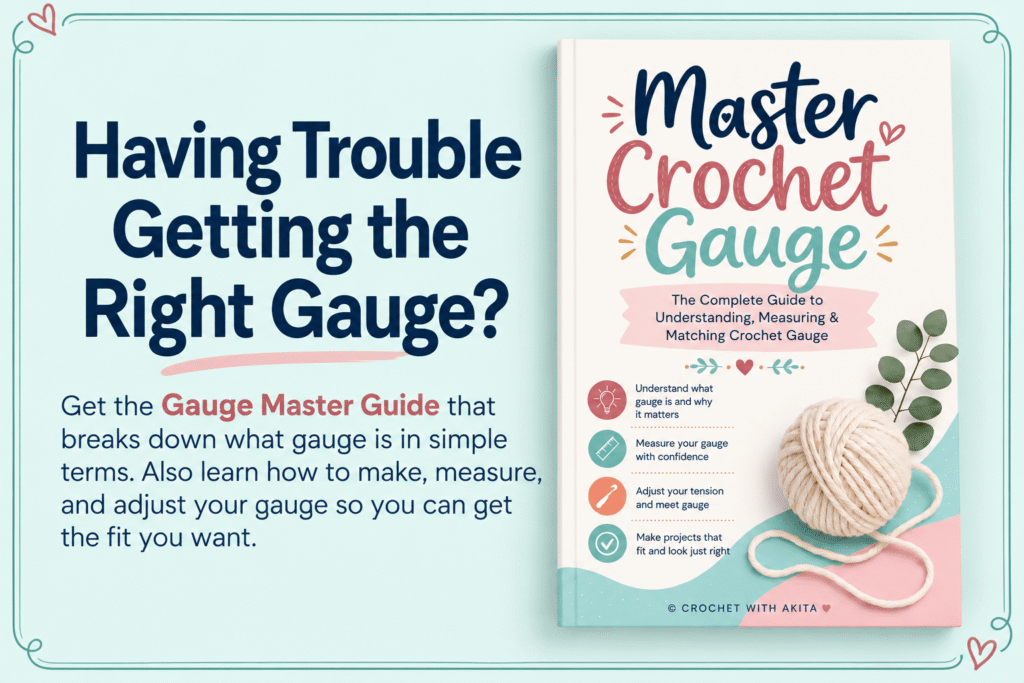
🧶 Having Trouble Getting the Right Gauge?
Get the Gauge Master Guide that breaks down what gauge is in simple terms. Also learn how to make, measure, and adjust your gauge so you can get the fit you want.
👉 Get the Gauge Master Guide
5. The Size You’re Making
If your pattern includes multiple sizes, write down the size you’re making somewhere visible.
For example: Size: Large
If you’re making a garment, you may want to record the intended finished measurements as well.
6. Your Starting Measurements
For projects where size matters, record your starting measurements.
For example, if you’re making a garment, you might record:
- Bust
- Waist
- Hip
- Arm circumference
- Arm length
- Body length
You can then compare the finished measurements with your original measurements.
This is especially useful if you’re making something for yourself and your measurements change during a long project.
Lorem ipsum dolor sit amet, consectetur adipiscing elit. Ut elit tellus, luctus nec ullamcorper mattis, pulvinar dapibus leo.
7. Your Starting Chain or Foundation
For many projects, it’s useful to record how many stitches you started with.
Write down the number somewhere in your project notes.
For example:
Foundation chain: 84
If you’ve modified the pattern, definitely record your changes.
8. Your Current Row or Round
This is probably one of the most important things to track.
Where did you stop?
Write: Last completed row- Row 7
If you’re working in rounds, record the round number.
You can also note where you stopped within the row or round.
For example:
Round 15 — completed through repeat 4.
If your project contains repeating sections, keep track of how many repeats you’ve completed.
For example: Completed- 6 of 10 repeats
This is particularly useful for:
- Blankets
- Shawls
- Garments
- Lace patterns
- Motifs
You can use a simple tally mark system rather than writing everything down.
9. Pattern Modifications
If you change anything about the pattern, write it down immediately.
Don’t rely on memory.
Maybe you:
- Changed the hook size
- Added or removed rows
- Changed the length
- Changed the width
- Added shaping
- Changed the sleeve length
- Used a different sewing method
Write down exactly what you changed.
Your future self will thank you.
10. Your Measurements as You Go
For projects where size matters, measure as you work.
You might record:
Body length: 12 inches complete
11. Yarn Usage
For larger projects, you may also want to keep track of how much yarn you’re using.
Started with: 1000 g
After half blanket: 620 g remaining
This can help you estimate whether you’ll have enough yarn to finish. And if you will have leftover yarn.
12. Where You Bought Your Supplies
You don’t necessarily need to record this for every project, but it can be helpful for specialty yarns or supplies.
Keep track of:
- Shop
- Website
- Product name
- Colour
- Date purchased
This is particularly useful if you discover you need more supplies halfway through the project.
13. Which Parts You’ve Finished
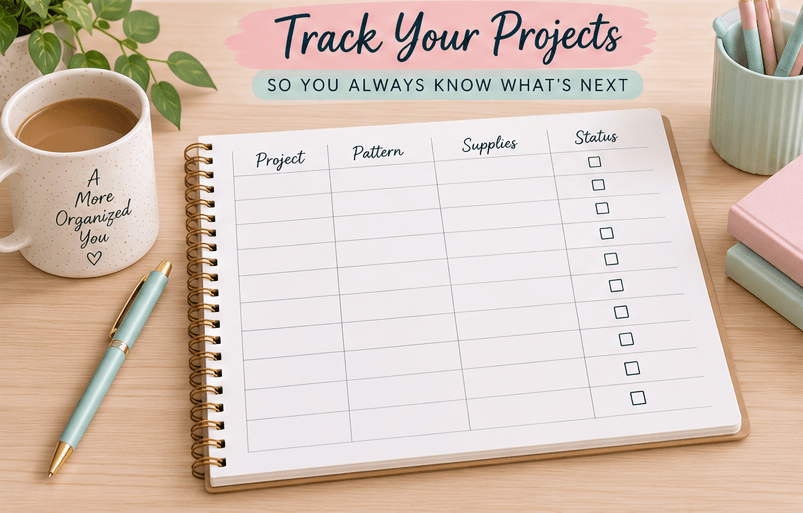
For projects made up of several sections or pieces, keep track of what you’ve completed.
For example:
☐ Front completed
☐ Back completed
☐ Sleeve 1 completed
☐ Sleeve 2 completed
☐ Seaming completed
This is especially helpful for larger projects or garments with several parts, where it can be easy to forget what you’ve already finished over time.
You can also use it for projects with multiple motifs or smaller components:
☐ Motifs/ granny squares: 10 of 20 completed
14. Assembly Details
If your project requires assembly, make notes about how you assembled it.
Record things such as:
- Which seam technique you used
- Any adjustments you made
15. Blocking Information
Blocking can change the size and shape of crochet fabric.
You could note:
- Blocking method for swatch and data recorded
- Whether you wet or steam blocked
- Measurements before and after blocking
- How much you stretched it
- Drying time
16. Finishing Details
Keep track of the final finishing steps too.
For example:
- Buttons embellishments attached
- Zipper added
- Edging completed
- Pieces sewn together
17. Problems You Encountered
Write down anything that caused problems.
Maybe:
- The pattern instructions were confusing
- The stitch count was incorrect
- Your gauge changed
- The yarn split
- The fabric was too stiff
- The project came out larger than expected
- You had to frog several rows of a repeat
These notes can be incredibly valuable if you make the project again.
Instead of repeating the same mistake, you’ll know exactly what happened.
18. What You Would Do Differently
Once you finish the project, take a few minutes to record what you learned.
Ask yourself:
- What worked well?
- What didn’t work?
- What would I change next time?
These notes turn one crochet project into useful information for your future projects.
19. When You Put the Project Down
Before putting your project away, record:
- Where I stopped:
- What I need to do next:
- Any important notes:
This takes less than a minute.
But when you come back to the project two weeks (or 2 years) later, you won’t have to spend twenty minutes figuring out what you were doing.
20. Keep Everything in One Project Journal
You don’t need a separate notebook for every crochet project. One project journal can hold all your project information — you just need to keep each project clearly separated.
Give each project its own page or section and write the project name at the top.
If you have several projects, you can keep a simple index at the front of your journal.
Want an easier way to keep track of your projects?
Grab my FREE Crochet Project Planner and keep your project details, notes, and plans all in one place.
👉 Download the FREE Crochet Project Planner
You Don’t Need to Track Everything
Keeping track of a crochet project doesn’t mean rewriting the entire pattern or documenting every stitch you make.
The pattern already contains the instructions you need. Your project notes should mainly record the things that are specific to your project — especially anything you changed or might forget later.
For example, instead of copying an entire pattern section into your journal, you could simply write: “Added 2 extra rows for length.” “Used 5 mm hook instead to match gauge.”
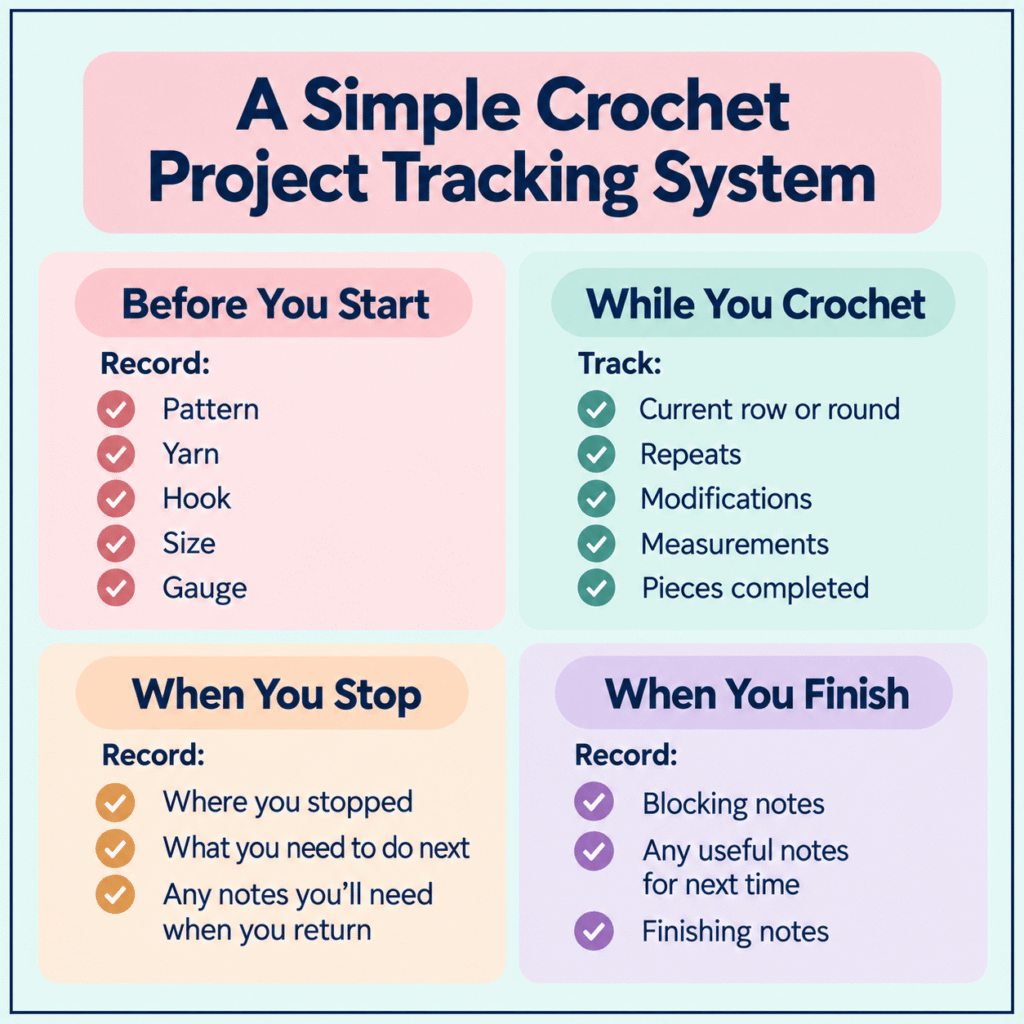
You don’t need a complicated system to keep track of your crochet projects.
The goal isn’t to turn crochet into paperwork.
It’s simply to make it easier to pick up where you left off, remember what you did, and learn from each project you make.
🧶 Want an Easier Way to Track Your Crochet Projects?
You don’t have to keep all of your project information in random notebooks, scraps of paper, or your head.
I’ve created a FREE Crochet Project Planner to give you a simple place to plan and track your crochet projects.
Use it to get your project out of your head and onto paper so you can actually see what needs to be done.
👉 Download the FREE Crochet Project Planner
🧶 Want to Keep Your Entire Crochet Life Organized?
If you love the idea of having everything in one place, the Ultimate Crochet Project Planner takes project planning much further.
Use it to organize your:
- Crochet projects
- WIPs
- Project ideas
- Patterns
- Yarn
- Gifts
- Plans
- Progress
- And more
✨ 100+ pages✨ 2 versions pages✨ Printable & editable✨ Instant access
👉 Get the Ultimate Crochet Project Planner Bundle
More Crochet Project Help
If you’re working your way through a crochet project, these posts can help:
🤔 Not Sure What to Crochet Next?
👉 Start here: How to Choose Your Next Crochet Project: 10 Simple Questions to Ask
📝 Want to Know How and what to plan before starting a new project?
👉 Learn what you need to do before you start any project
🧶 Have Several Crochet Projects Going at Once?
If you have multiple WIPs competing for your attention, learn how to keep them organized:
👉 How to Organize Multiple Crochet Projects Without Losing Track of Them

Lorem ipsum dolor sit amet, consectetur adipiscing elit. Ut elit tellus, luctus nec ullamcorper mattis, pulvinar dapibus leo.
Hey, I’m Aki!
Crochet has been a huge part of my life for the past few years, and I still can’t believe I get to do this every day because of wonderful people like you. I’m so happy you’re here!
I design fun, unique crochet patterns with beginner-friendly video tutorials because I believe you should never feel limited—in crochet or in life!